Home
Contact Us
Order Info
Clients
Helpful Links
Related Articles
Related Videos

Applications Menu

Acoustical Consultant
Industrial Noise Control
HVAC Noise Control
Sound Control-
   Church & Gym


Products Menu
Sound Curtains
Sound Enclosures
Sound Barrier Wall
Outdoor Sound Curtains
Anechoic Chambers
Acoustic Banners
Acoustic Test Enclosures
Acoustic Foam
Acoustic Baffles
IsoMax Clip
Silencers
Acoustic Louvers
Vibration Isolation
Sound Blankets
Duct Lagging
Vinyl Barrier
Damping Compound
Fabric Wrapped
   Acoustical Panels

Composite Foam
Acoustic Door Seals

Case Studies
Chiller Noise
Hydraulic Pump Noise
Air Compressor Noise
Quiet Room
Industrial Fan Noise
Liquid Chiller
   Compressor Sound
   Control

Outdoor Noise
Outdoor Noise Barriers-
   Outdoor Sound
   Curtains

Outdoor Transfer Pump
   Noise

Transformer Noise
Gymnasium Sound
   Control Solutions

Soil and Groundwater
   Remediation System
   Noise and Sound
   Control

Church / School
   Multi-Purpose Room
   Noise

Roof Top Unit RTU
   Sound Barrier

Generator Noise


Air Compressor Sound Control

©2008 Unger Technologies, Inc. All Rights Reserved.


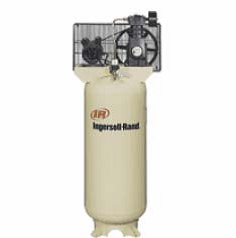
Air compressors are a common piece of equipment on the factory or warehouse floor and they are used for many different functions within the plant or office. Air compressors come in many different sizes and configurations. Typically air compressors are constructed with several common components – a tank for storing the compressed air, a motor to compress the air into the tank, and fittings to attach hoses for use of the compressed air. There are several different noise sources on a typical air compressor. First is the motor, which usually runs often to rarely depending on the amount of air demanded from the tank. Second is the compressed air itself usually from some type of fitting, tool or device for performing the task or operation within the facility. Air compressor noise can be reduced in several ways.
First and foremost, can the compressor be moved to an area or room to reduce or eliminate worker exposure? Can you move the workers and/or the process to a safe distance away from the noisy compressor? If neither of these are an option, some sort of engineering controls in the form of sound abatement can be constructed or applied.
Acoustic Enclosures or sound barriers are a common solution for the noise reduction of air compressors. The noise enclosures can be constructed of several different materials. Common building materials such as stud and gypsum board or plywood in conjunction with sound reduction materials can be an inexpensive way of soundproofing your air compressor.
Several critical items should be addressed when applying a sound enclosure for noise control. How much air does the compressor need to function and where will this air supply come from. How much air does the motor need for cooling the heat it builds up? How will I supply the compressor and motor air without the sound escaping from the sound housing? What accessibility will be needed to maintain the air compressor? How will I provide the access for maintenance in the noise enclosure? All of these items can be addressed and fulfilled with engineered sound reduction products and noise reduction materials.
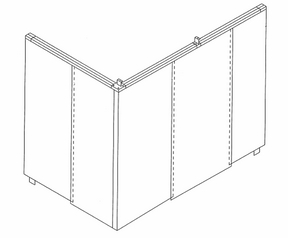
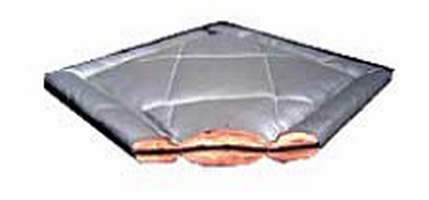
Depending on the current sound levels of the compressors and your noise reduction goals, an abatement solution can be determined. In most applications a sound curtain enclosure will meet your sound reduction needs. This is a two to four sided enclosure with or without a roof. Typically a frame and track is constructed to suspend the sound curtain panels. This can be provided by the acoustical material supplier or constructed on your own with tube steel, angle, or strut. The sound curtain material is a composite material bonding mass loaded vinyl with an acoustical absorber and faced with a vinyl diamond stitched facing. The vertical edges velcro together to form walls and the panels are suspended by grommets to the framework. Roof panels, silenced ventilation baffles, clear vinyl sound barrier windows, and moveable track and trolley system are some of the options available. The sound curtain solution, depending on design, will typically achieve reductions in the range of 10 – 18 dBA.
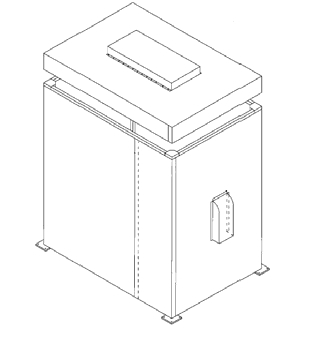
For sound critical areas a steel enclosure should be considered. These are self supporting structures of varying design and connection. Typically 4” thick modular panels with solid steel outer skin and a perforated steel inner skin and 4” thick of acoustical insulation. Available options include acoustical doors, windows, silenced ventilation, forced air ventilation, lighting packages, removable panels, and silencers. Reductions of 20 – 35 dBA can be achieved.
Some simple planning and/or expert advice will lead you down the right path to avoiding or reducing a sound problem with you air compressor.


Typical Air Compressor
 
Resources
Air Compressor Sound Control  


©2003-2008 Unger Technologies, Inc. All Rights Reserved.