 888-213-4711
Anechoic Test Chambers
Often called ‘sound chambers,’ eNoise Control’s anechoic test chambers, hemi-anechoic, and quiet- rooms are manufactured with modular, metal acoustical panels. This modular approach allows us the ability to construct acoustical rooms and chambers of various sizes and shapes and for a multitude of applications. Each component is pre-engineered and can be interchangeable. Our systems can include a selection of openings that include; acoustical doors, windows, ventilation systems, etc., to handle many different job requirements.
We can provide totally integrated systems and designs that include stringent requirements for such areas as; isolated floors, light and power connections, computer connections, ventilation, temperature and humidity control, instrumentation sleeves, control supports, working floors, and single and double sound doors. eNoise Control can also supply, if necessary, a floating floor system to match the acoustical isolation properties of the chamber walls. Host site conditions and the desired level of acoustical performance determine the floor design parameters. Most systems will also provide interior and exterior finish options to suit your worksite.
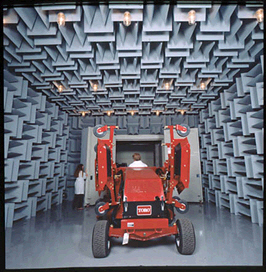
Anechoic Chambers
Our experienced Acoustic Consultants can provide sound and noise level data specific to your site that will include recommendations for a sound chamber that will provide a viable, cost-effective solution to your noise problem.
Quiet Rooms provide a controlled acoustic environment to conduct noise evaluations on a product or specimen without the interference of outside noises and vibrations. Typically used on factory plant floors or in-plant labs, eNoise Control Quiet Rooms are specifically engineered for high sound-transmission-loss and sound-absorption ratings which provide excellent noise reduction characteristics.
Hemi-Anechoic Chambers provide an essentially free-field environment over a reflective plane (the floor) for the measurement of hemispherically radiated sound waves emanating from a sound source. Both types of chambers are well suited for rating sound output, and for providing directivity information.
Anechoic Chambers provide an essentially a free-field environment for the measurement of spherically radiated sound waves emanating from a sound source. Anechoic Chambers are echo-free enclosures with a sound energy absorption level of 99% to 100%, or a reflected sound pressure level of 10% or less. The frequency at which the energy absorption drops below 99%, or the pressure reflection exceeds 10%, is known as the low-frequency cut-off. Sound absorption is obtained by lining the walls, ceilings, and floor with wedges or other sound absorbing elements, depending on performance level required and cut-off desired.
